
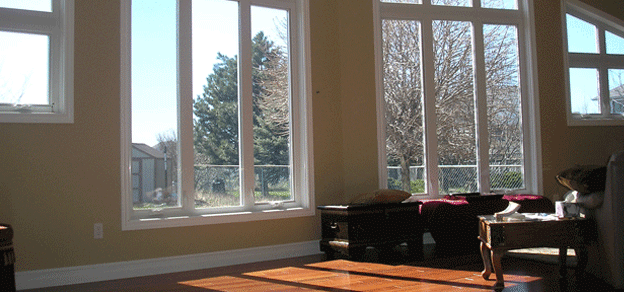
Environmentally efficient housing starts with the basics: south
facing windows with deciduous trees that block the sun in the
summer and let in light in the winter. Building a well insulated
home also ensures that you stay cool in the summer and warm in
the winter.
You have options!


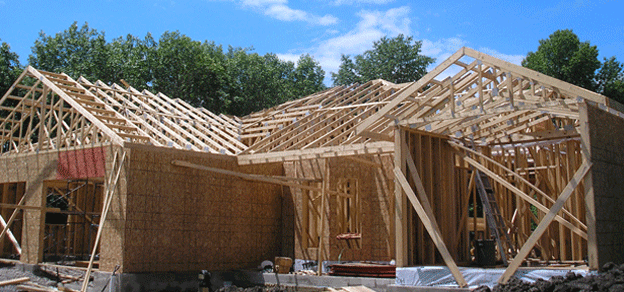
Traditional wood framed home, with insulation board.
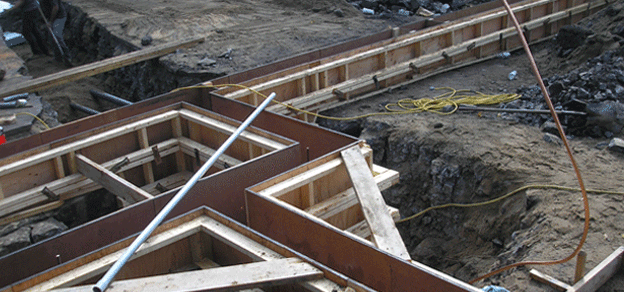
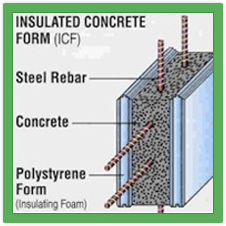
Insulating Concrete Forms (ICFs) - Stackable polystyrene forms are used to pour cement for the foundation and even some above grade walls in your home. The combination of cement encased in the polystyrene not only makes your home highly energy efficient, but provides a great sound barrier from outside noise.
Certified LEED (Leadership in Energy and Environmental Design) - From foundation to roof, LEED provides many techniques to apply when building your home to make it green and energy efficient. This investment during building helps save money on heating and cooling and adds value to your home for resale.
Self sufficient - With additional options like solar panels and geothermal heating and cooling, your home can stop being an energy consumer and can start to produce energy. Green isn't just good for the environment; it's good for your wallet!
There are many options to choose from for heating your new home or addition. These options can include traditional furnaces powered by natural gas, oil, propane, wood boilers or geothermal heat. Another way to help heat your home is to incorporate passive solar design elements, such as south facing windows and deciduous trees to block the heat of the sun in the summer and let it in during the winter, into your home design. These simple design techniques can make a huge impact on your heating and air conditioning bills.

Steve Garvin
Kingston, ON
Call: (613) 929-8852
Email: info@sggeneralcontracting.com
Web Services Provided by Little m Design - Start small, grow big.